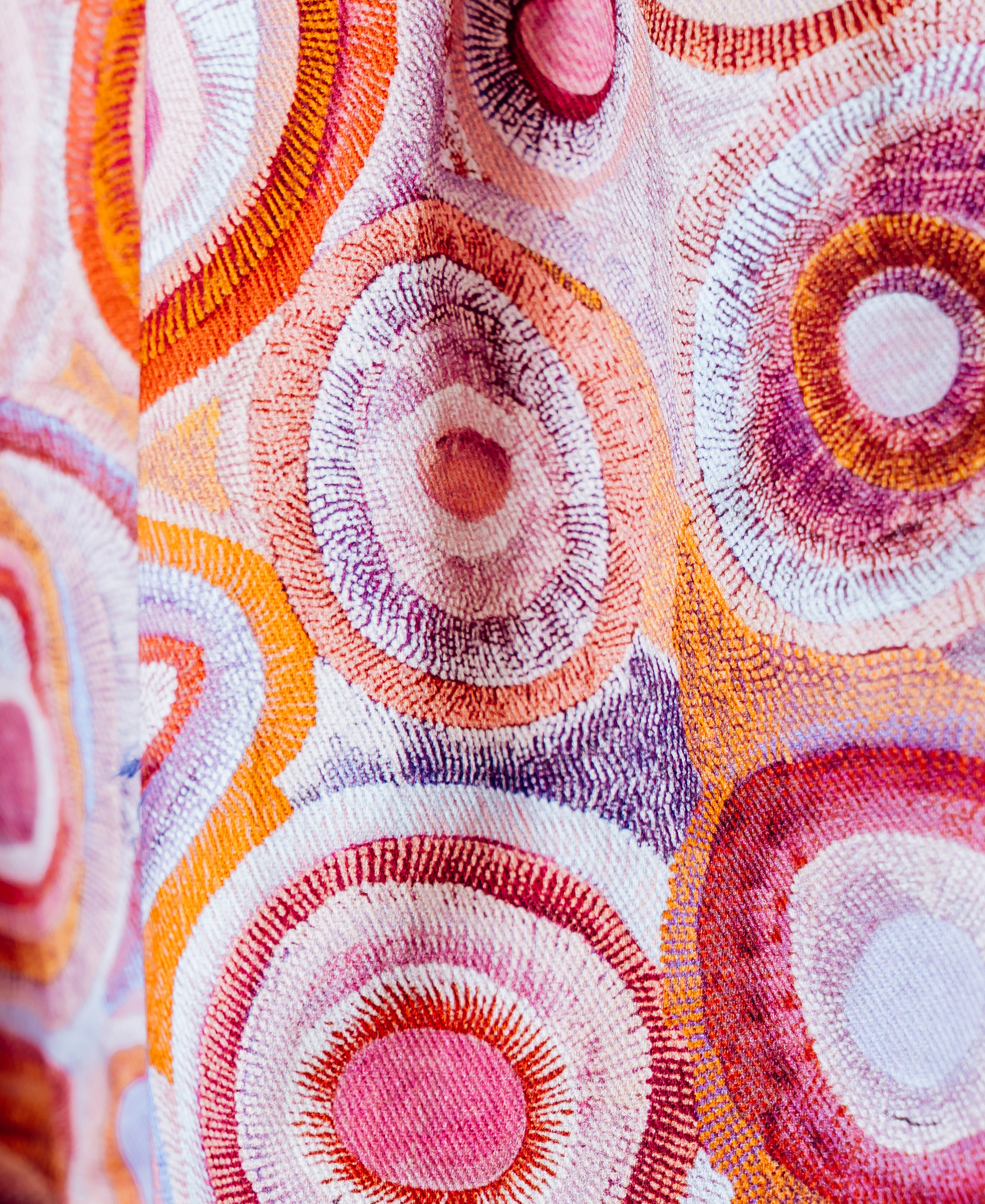
The design reflects the traditional customs of pinafores, being simple and easily cleaned. The upcycled vintage lace hemming, providing a subtle reference to its inspirational roots, that of colonial designs. The indigenous fabric on the dress, and its use of traditional iconography links to the historical textile practices of Indigenous Australians for generations. The outfit consists of two garments, a long-sleeved midi dress with a fitted bodice, paired with a side tie pinafore. The dress is made from an Aboriginal Ngapa Jukurrpa (water dreaming) fabric is fully lined in a wine poplin that not only creates a seamless finish but is more comfortable for a child. The sleeves are gathered at the shoulder and cuff to create long puffed sleeves, as well as at the waist for a fuller skirt. Interfacing was used in the collar and cuffs to reinforce structure. The dress is closed with a zipper at the back, and two pleats line the bottom of the skirt. The pinafore is a calico fabric hand dyed with black tea. It has a double lined single bodice piece cut on the fold, to create a bodice that is strong and seamless. The wider neckline accommodates the collar, whilst the open sides reveal the dress underneath and allow it to be tied at the sides for a more fitted shape. The skirt is shorter and narrower than the dress, to compensate for the open sides and once again reveal the dress underneath. Embroidery embellishes the bodice, providing a focal point through colour and texture, and reestablishing the outfits focus on Australian country. Upcycled vintage lace lines the lower hem of the pinafore. Tt is closed at the back with gum buttons; laser cut with a bottle brush design.